
Airbnb's New House Rules: What's Actually Changing for Hosts
Airbnb emailed hosts this week about "important changes to house rules", and the headlines followed quickly: no more washing up, no more fines, hosts losing control of their own homes. If you run your own Airbnb, it's easy to read that and panic.
We've been through Airbnb's email and its Help Centre pages line by line, and we spoke to Dan Budden from Host & Scale, who runs a community for Airbnb and short-let managers, to get his take. The short version is that it's less dramatic than it sounds. If you already use a cleaner and keep your listing tidy, very little changes. There are still a few things every host should update before 20 November.
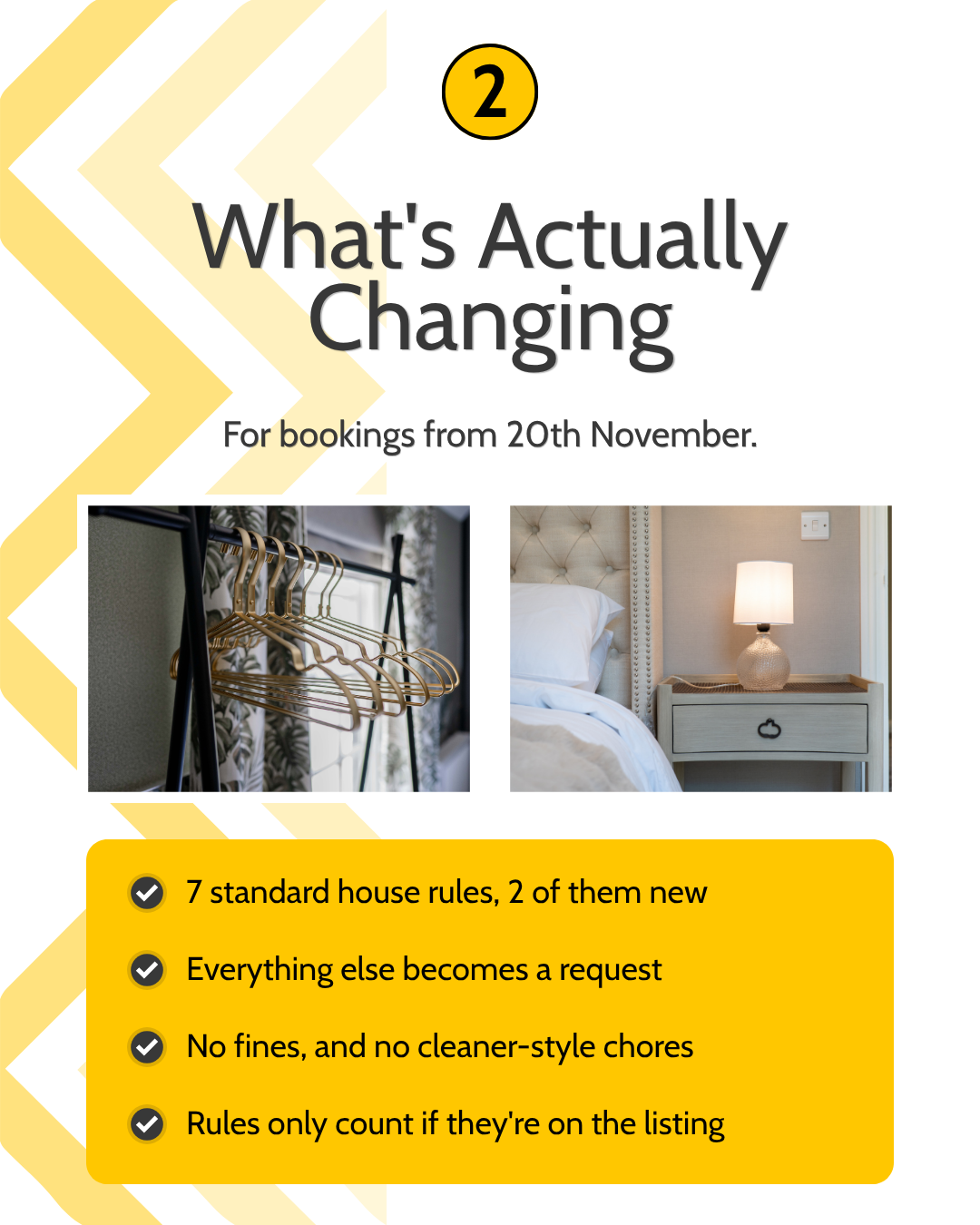
What's Actually Changing
Summary of Airbnb's new house rules for bookings from 20 November 2026
When it starts
The new house rules editor is live now. The new policy applies to reservations booked on or after 20 November 2026. Bookings made before then keep the house rules that were on your listing when the guest booked.
A lot of this isn't new
Dan's first point was that much of this was already in Airbnb's policies. The timing of the announcement has made it feel bigger than it is. Airbnb already stopped hosts asking for photos of guest ID before arrival, requiring guests to install apps or create accounts elsewhere, and asking for reviews on other websites. What's new is how house rules are set out, what counts as reasonable, and how firmly Airbnb will enforce it.
What's actually changing
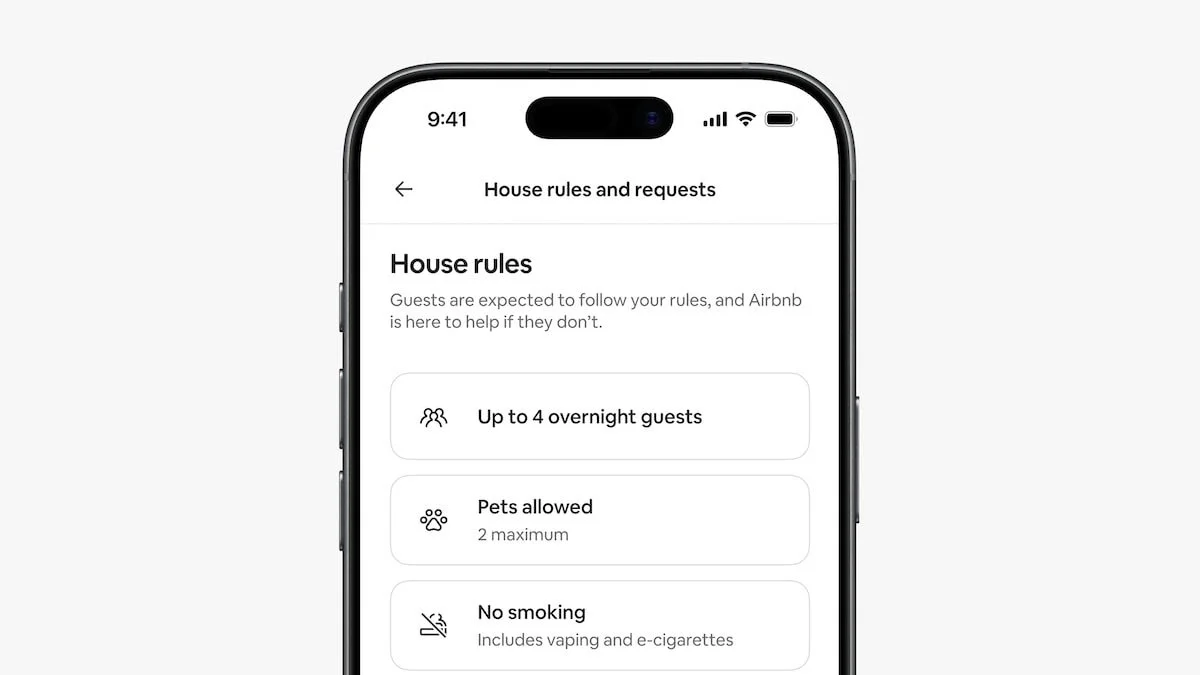
Seven standard house rules. You choose from maximum overnight guests, quiet hours, events, pets, smoking (including vaping), commercial photography and filming, and lock up at checkout. Maximum guests and lock up at checkout are new.
Everything else is a request. Guests must follow house rules and are encouraged to follow requests.
Rules only count if they're on the listing. You can't add new rules after booking, by message, on signs in the home or in person. Messages and guidebooks can remind guests of rules, but they can't create new ones.
No fines. Hosts can't impose fines or penalties on guests.
Fees belong in the price. Anything you charge for an advertised part of the listing has to be in the price shown at booking. Optional extras, like a breakfast service, can still be listed as requests.
Contracts are limited. Separate rental agreements are generally only allowed where the law requires one, for an optional extra, or for stays of 28 nights or more.
Checkout chores: what's in and what's out
This is the part that grabbed the headlines. Hosts generally can't ask guests to do work a cleaner would normally do.
No longer allowed: washing and putting away dishes, stripping beds or starting a wash, and taking rubbish off-site.
Still fine to ask: putting used dishes in the sink, gathering used towels, sorting rubbish and recycling into the indoor bins, and turning off the air conditioning when leaving.
If a cleaner already turns your property round between stays, none of this affects your changeovers.
Guest ID, apps and portals
This is the change most likely to catch out organised hosts. From 20 November, hosts can't ask guests for personal details during the booking or stay. That includes phone numbers, email and home addresses, ID documents and financial details, unless the law requires it or an allowed contract does.
You can still check ID at check-in, as long as your listing says so. You can't keep a copy.
You can't make guests sign up to an app or website to get in. Keyless entry apps are fine if guests can ask for another way in.
WiFi log-ins that ask for an email address aren't allowed.
If you use a guest portal for check-in, check that it doesn't make ID uploads or sign-ups a condition of getting in on Airbnb bookings.
What isn't changing
Guests are still expected to leave the home without needing excessive cleaning, and to report any damage.
Damage claims still go through Airbnb.
You can still review guests on cleanliness.
If a guest breaks a house rule, or says before check-in that they plan to, you can cancel without fees or penalties.
This is Airbnb's policy. Booking.com and direct bookings follow their own terms.
Who this is really aimed at
Most professional hosts won't notice much difference, and Dan's view is the same. These changes target listings that treat guests as free cleaners, bury rules in long messages or threaten fines. If that isn't you, this is mainly a case of tidying up your listing.
Your checklist before 20 November
Set the seven standard house rules in the Listing editor, including maximum guests and lock up at checkout
Move every other instruction into Requests, and keep them reasonable
Delete any fines from your listing, guidebook, messages and signs
Check your check-in process doesn't require ID uploads, app sign-ups or contact details
Make sure charges for advertised features are in the price guests see at booking
If Airbnb flags a request, fix it or appeal. Ignoring it can lead to a warning on your listing and lower search visibility
Rather not deal with it?
Keeping listings in line with Airbnb's rules is part of what we do for the hosts we manage. If you'd like to hand over your short-let, we'll start with a free valuation.
Follow @ajmletting on Instagram for more hosting tips.
Sources: Airbnb's email to hosts, and the Airbnb Help Centre articles Reasonable house rules and requests, and Contracts, personal data and apps (October 2026).